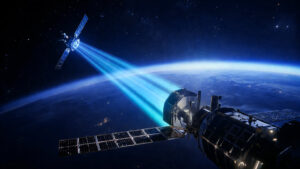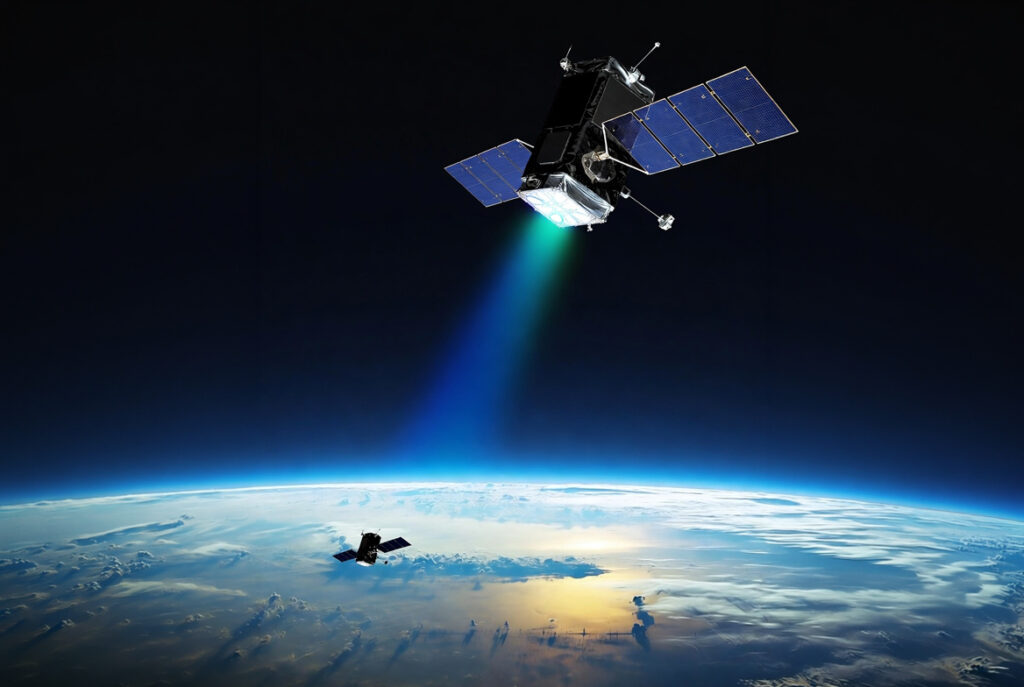
Space exploration technology needs a second sun to thrive. The University of Surrey and Space Power are addressing a key challenge for satellites operating in Low Earth Orbit (LEO): maintaining power supply during eclipse periods when solar illumination is unavailable by using a second sun for satellites.
Wireless power transmission technology aims to deliver supplementary energy, thereby enhancing the operational efficiency of small satellites in LEO.
Through this collaborative space infrastructure initiative, the research team is developing innovative laser-based systems capable of transmitting solar energy from illuminated satellites to smaller ones in shadow below. This represents the first laser power-beaming prototype created outside of government-led organisations, with plans for commercial availability targeted by 2025.
Wireless power beaming constitutes a transformative technology for space infrastructure. It supplies auxiliary power that significantly improves the baseline performance of small satellites in LEO. Technical development will leverage the University of Surrey’s specialised laser laboratories and advanced optical systems within the Department of Physics and the Advanced Technology Institute — recognised globally for expertise in laser and photovoltaic technologies. Space Power’s inaugural commercial product is designed as a plug-and-play module for satellite manufacturers to integrate into LEO constellation offerings.
The absence of such power solutions would necessitate larger numbers of satellites to ensure continuous functionality, increasing costs, launch-related emissions, and space debris. As small satellites undertake increasingly ambitious missions, this issue becomes more pressing.
The initiative forms part of the £7.4 million SPRINT (SPace Research and Innovation Network for Technology) programme, which grants businesses access to university space expertise and supports the commercial application of space technologies. This power-beaming project builds upon an earlier feasibility study on laser transmission, funded through the SME Innovation Voucher scheme. The current phase will evaluate efficiency gains from laser power beaming, refine the technology, and gather essential data for prototyping small-satellite systems in orbit.
Professor Stephen Sweeney, Professor of Physics at the University of Surrey, stated:
“The University of Surrey has a long track record in photonics and space research and brings unique expertise in both high power lasers and photovoltaics technologies. We have many years of experience in optical wireless power and are delighted to work with Space Power to help develop such technologies for space-based applications.”
Keval Dattani, Director of Space Power, remarked:
“The SPRINT project is an important development from our feasibility study with the University of Surrey that enables us to approach customers with confidence and demonstrate the improved efficiencies available by using auxiliary power systems. By focusing on light optics and power beaming, we are looking to increase small satellite operating efficiencies by a factor of between 2X-5X.
“We have seen the benefits of powering satellites by laser which enables smaller satellites, simpler systems and fewer resources – whilst performing more work to help us understand our planet better. For us, this is a neat solution with long term benefits, not least for lunar outposts and asteroid mining but back here on earth too.”
Laser Beaming Satellite Power Technology
The collaboration focuses on laser beaming satellite power to create a terrestrial demonstrator (TeDe). This system will beam energy from the ground to satellites, acting as a “second sun” during eclipse periods when solar panels cannot generate power.
Benefits of Laser Beaming Satellite Power
Implementing laser beaming satellite power can significantly increase small satellite operating efficiency. It reduces dependency on battery storage and allows missions to run longer with more reliable energy supply. The University of Surrey and Space Power are working together to make this technology a reality for Low Earth Orbit (LEO) satellites.